02625 October 2026
Clowder
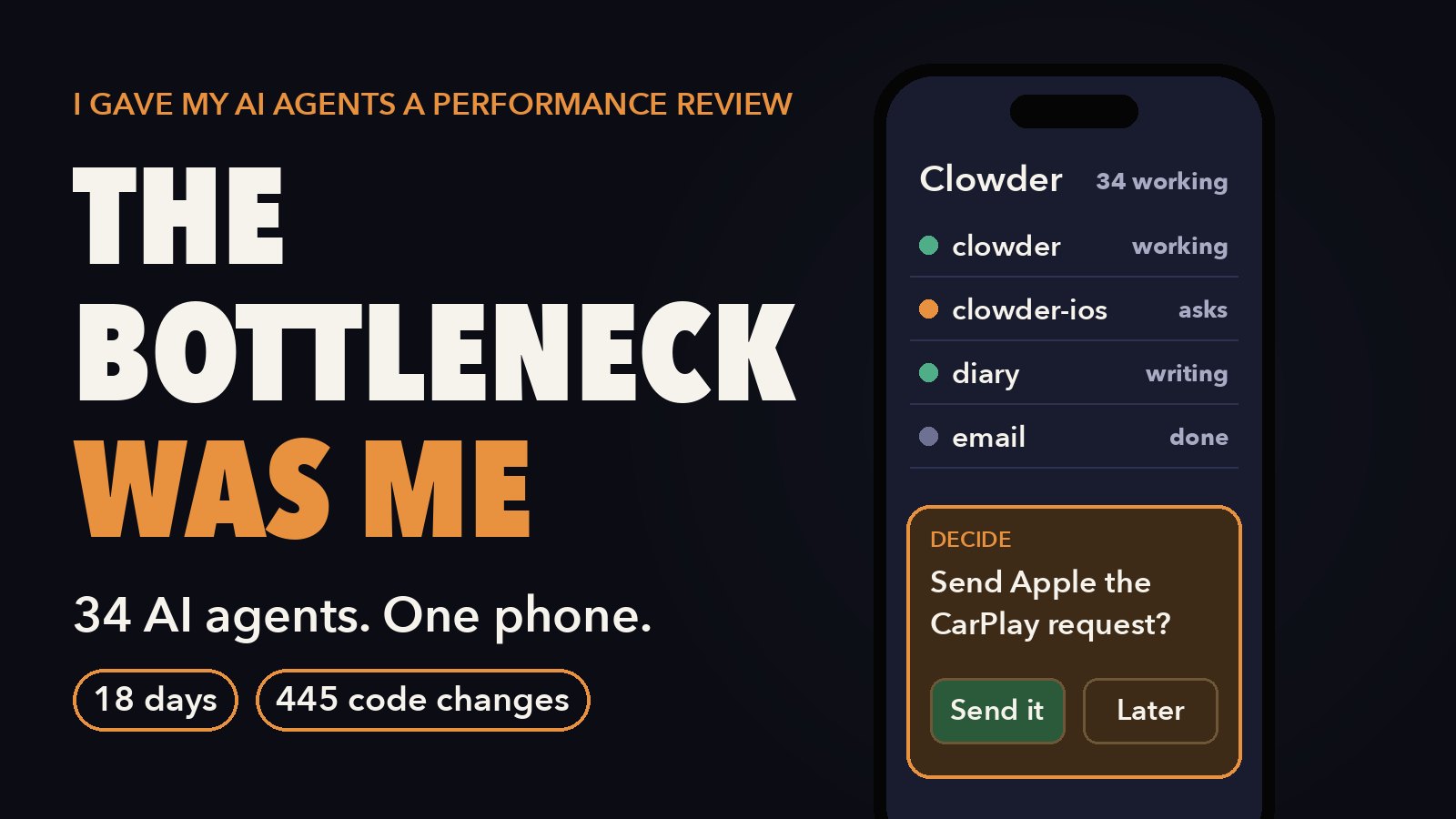
My control room for AI agents. From my phone I see every agent working on my Mac. I answer the one that is stuck. When typing is too slow, I talk to them by voice.
I have been shipping software for fifteen years. For the last two, most of the code that goes out with my name on it was written by a machine. The part everyone assumes got automated is not the part that got automated.
Two years ago I wrote code all day and reviewed a little. Now I write specifications all day and review everything. The work did not get smaller. It moved, from producing to deciding, and the decisions arrive faster than they used to.1
That is a different job with the same title, and it is the reason I do not sit a live coding test any more. Watching me type is measuring the one part of this work that a machine already does better.
An agent does exactly what you asked, immediately, including when what you asked for is wrong. Writing a brief that cannot be read the wrong way, and catching the answer that is subtly wrong at review, is the whole job now.2
You do not learn that from the tools. You learn it from having been the person who got called when a system failed in production, enough times to know what failure looks like before it happens.
An agent only knows what you wrote down. So the specification stopped being the document everyone skips and became the input that caps the quality of everything downstream.3
The useful side effect is that the reasoning survives. When a decision is questioned eight months later, there is a document that says what we knew at the time and what we traded away.
Nothing goes out because a model sounded confident. There is a gate, somebody stands at it, and on my work that somebody is me.4
A client is not buying throughput. They are buying a person who is accountable for what ships, and who has enough history to know which changes deserve a second look.
I am not cheaper because a machine does the typing. I am faster, and the expensive part of software is where it has always been: deciding what to build, and catching what is wrong before a customer finds it. That is the part I sell.
I work business to business through my own company, fully remote, and I am open to one more engagement. The quickest way to reach me is LinkedIn.
Four of the systems I designed and run. Each one is an argument for the same thing, so each one is listed with the place where a person still has to decide.
My control room for AI agents. From my phone I see every agent working on my Mac. I answer the one that is stuck. When typing is too slow, I talk to them by voice.
Every question my agents ask me goes through it first. It answers the easy ones from a log of what I decided before, and adds a devil's advocate note to the risky ones.
I am CTO of an AI startup in London. We build a platform for recruitment agencies: candidate search, calling, a meeting notetaker and CV matching. Its screening cites the exact CV line behind each answer. I build it with a team of AI agents.
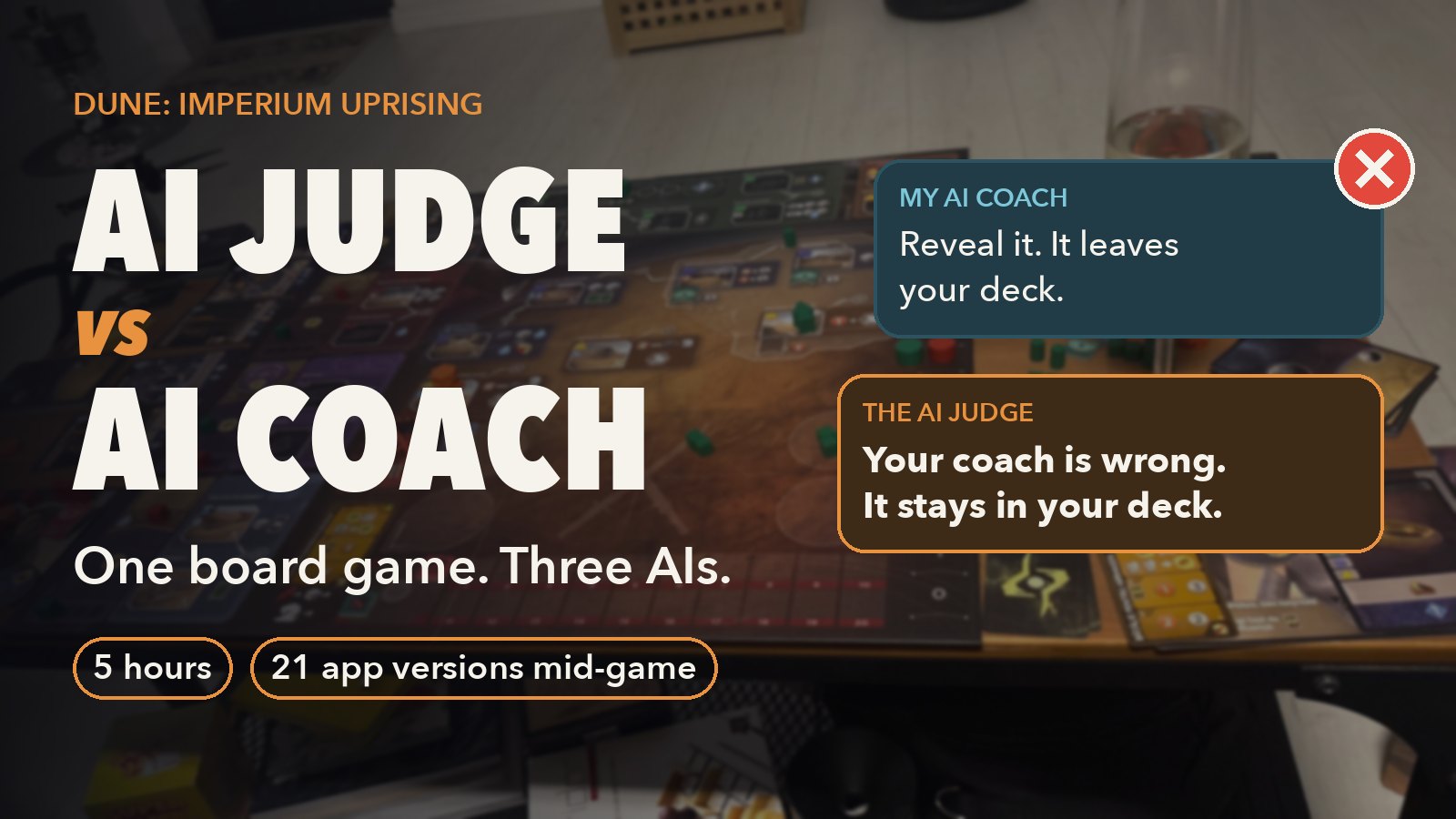
A board game copilot, built in one evening while the board was already set up. Each player gets a private AI coach. A judge speaks only when someone breaks a rule.
Entries written as the work happened, kept in the open. The argument above is the summary. The diary is where it was worked out, including the days it went badly.